

Unlocking the Mysteries of Sheet Metal


Author
Deeply engaged in the field of mobile energy storage support, focusing on customized working condition adaptation, we empower various equipment to operate stably for a long time with reliable energy storage structures.
Lemione Zou


"Sheet metal"—a term that might first bring to mind car bodies—actually encompasses a far wider range of applications than one might imagine. It extends beyond automotive exteriors to include everything from household appliances, fine tableware, and commercial kitchen equipment to computer casings and aircraft cowlings. Let’s explore the secrets of sheet metal, delving into its fabrication processes and diverse uses.

Sheet metal—a general term for metal in flat, thin sheets—is widely used in industry thanks to its unique properties. Compared to solid metal blocks, thin metal sheets are much easier to cut and fold. Their high strength means that even a thin sheet can be fashioned into various products; this ensures high material utilization and, consequently, lower costs—factors that have driven its widespread industrial adoption. In fact, humans have used thin metal sheets to craft weapons since as early as 4000 BC. Although metalworking was far more difficult than woodworking back then, repeated manual hammering could thin the metal out—a process akin to forging. It wasn't until around 600 BC that the Middle East and South Asia saw the emergence of a precursor to modern sheet metal machinery: the rolling press. These presses used two large rollers to flatten metal into thin sheets—a process remarkably similar to rolling out dough.

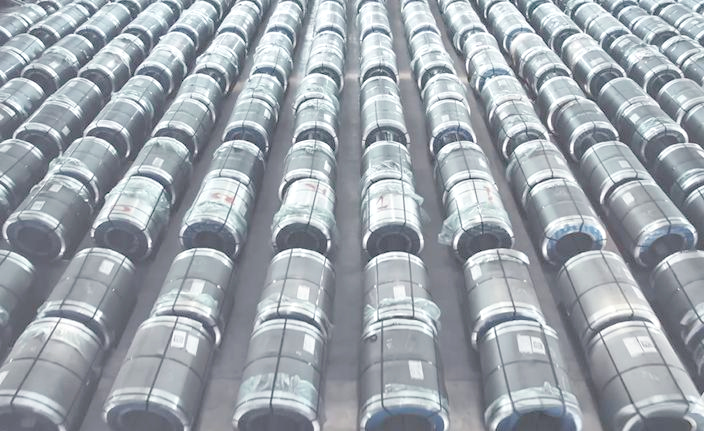
Common sheet metal materials include iron, stainless steel, aluminum, and copper. In modern steel sheet metal production, molten metal is first cooled in a high-temperature steel mill environment to form large, heavy semi-finished steel slabs. These slabs are then sent to a rolling mill for processing at temperatures between 1,100°C and 1,250°C; the softened slabs are pressed into what is known as hot-rolled steel plate. Because these plates are relatively thick, they are primarily used in industries such as construction and shipbuilding. However, such thickness is often excessive for the sheet metal products used in everyday life, so the material typically undergoes further processing to reduce its thickness. We refer to this pressing process, carried out at room temperature, as cold rolling. Through cold rolling, we can produce extremely thin steel sheets—some as thin as 1 mm.
It is worth noting that there are significant visual differences between cold-rolled and hot-rolled steel. Untreated hot-rolled steel often retains a dark, carbonized appearance with a rough texture; this is known as "black skin" material. In contrast, cold-rolled steel undergoes processes such as heat treatment or pickling prior to pressing, resulting in a smoother, flatter surface with a bright or matte metallic sheen; this is known as "bright" or "clean" sheet. To facilitate subsequent processing or transport, the pressed sheet metal is typically coiled into cylinders or cut into flat sheets to meet specific manufacturing requirements.
Next, let us explore the methods used to process sheet metal.
Sheet metal can be categorized by thickness into thin sheet metal and thick sheet metal. Material with a thickness of less than 3 mm is classified as thin sheet metal and is widely used in appliances, consumer goods, and automotive manufacturing. Material exceeding 3 mm in thickness is classified as thick sheet metal and is primarily used in construction, heavy machinery, and shipbuilding. Although there are slight differences in processing techniques between the two types, the overall processing workflow is similar.
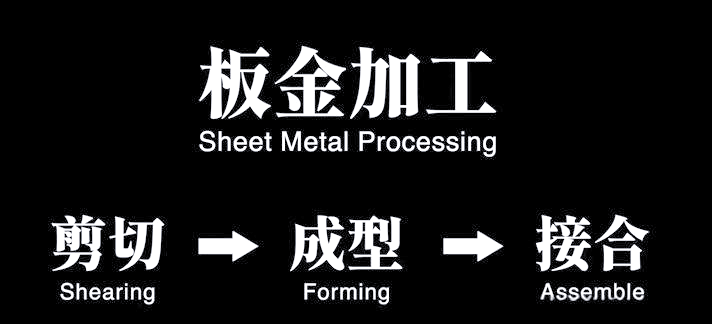
The sheet metal processing workflow can be divided into three key stages: cutting, forming, and joining. First, let us examine the cutting stage in detail. Similar to paper cutting, this step involves removing the required shape from the raw sheet material—a process professionally known as "blanking." In industrial production, punching and laser cutting are two common cutting methods. Punching utilizes a press machine and shaped dies to cut the material into form using high pressure, enabling rapid hole punching. Laser cutting, on the other hand, uses a laser beam to cut metal sheets with high precision; it is ideal for creating complex shapes or producing small-batch prototypes. However, it is worth noting that laser cutting may be limited by thermal deformation when processing thick sheet metal; in such cases, high-power lasers or waterjet cutting processes may be considered.
Next is the forming stage, where bending, stamping, and hydroforming serve as the primary methods for shaping the sheet metal. These methods shape sheet metal into the required forms and structures, laying the groundwork for subsequent joining processes.
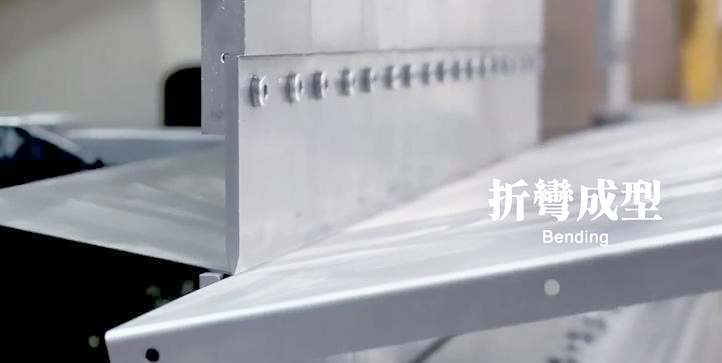
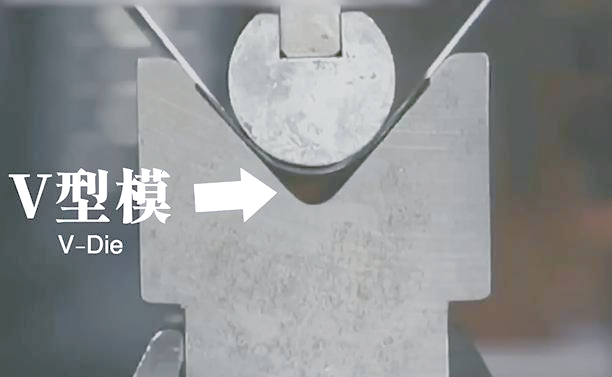
Bending is a crucial step in sheet metal forming, typically performed using a bending machine. The principle is akin to origami: the sheet metal is bent through the application of pressure from upper and lower dies. The upper die—often referred to as the "tool" or "punch"—comes in various types, such as straight blades and curved blades. Curved blades are designed to prevent workpiece interference during the bending process, while the lower die (typically a V-die) plays a vital role in determining the final shape.
Bending alone enables the manufacture of numerous everyday products—such as computer cases, stylish furniture, and machinery housings—making it a massive industry in its own right. Meanwhile, stamping (or press forming) is a technique that creates three-dimensional shapes using high-pressure impact combined with molds; this is also known as the deep-drawing process. This technique is suitable not only for industrial parts but also for household metalware like cups and bowls. However, sheet metal shares characteristics with fabric: while easily shaped, excessive deformation in a single area can lead to fracturing. Consequently, the stamping process often involves multiple dies and successive strokes to distribute the deformation and achieve the desired form. Even the seemingly simple curved surface of a kettle requires meticulous crafting through multiple stages.
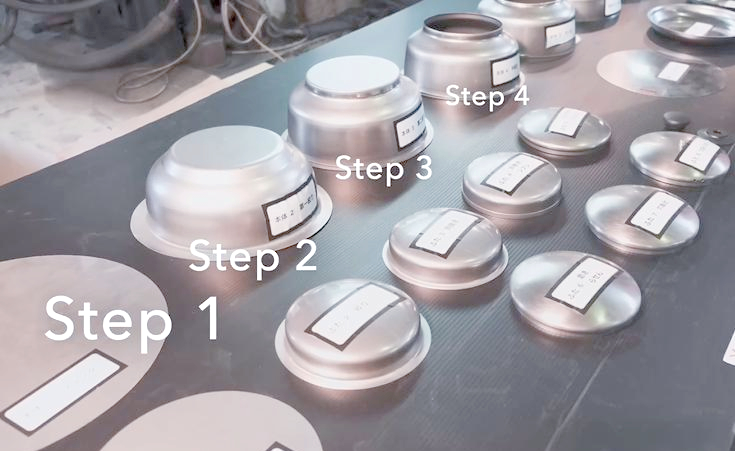
Furthermore, for elongated shapes, we employ "deep drawing"—an extended version of the stamping process. This involves clamping the sheet metal and then applying gradual pressure via a mold to slowly form the elongated shape. These stamping steps can be efficiently linked using automated equipment, enabling the production of multiple parts from a single sheet or the completion of several processes in one go—a method known as progressive stamping. This efficient assembly-line approach serves as a valuable model for various industries.
Next, let us discuss another sheet metal forming method: hydroforming. Hydroforming is similar to stamping, but instead of shaping the material through impact, it utilizes fluid pressure to deform it. For instance, in the tube hydroforming process, fluid is injected into both ends of a tube at ultra-high pressure, causing the metal material to deform under that pressure. In addition, there are complex processes such as explosive forming, which enable the creation of intricate shapes that are difficult to produce with conventional molds. These methods are widely used to manufacture items with unusual curved surfaces or extra-thick metal components, such as bicycles, bicycle frames, exhaust pipes, and vacuum flasks.
Finally, the formed sheet metal parts undergo careful assembly and joining; they can be secured through welding or by using various fasteners, screws, or rivets. Of course, there is much more to the art of sheet metal forming; this has merely been a brief introduction to the basics.
In a similar vein, people—like metal—require continuous shaping and transformation to reach their ideal state. On life's journey, we too must soften our mindset and remain open-minded to broaden our horizons and unlock new possibilities. Only then can we, like sheet metal, transform into a variety of meaningful shapes and fill our lives with infinite potential.
- Unlocking the Mysteries of Sheet Metal
- What is Sheet Metal Fabrication?
- Introduction to Multi-Scenario Applications of Electric Energy Storage Power Units for Landscaping and Vehicle-Mounted Equipment
- Introduction to the multi-scenario application of consumer electronics long power supply panels and casings